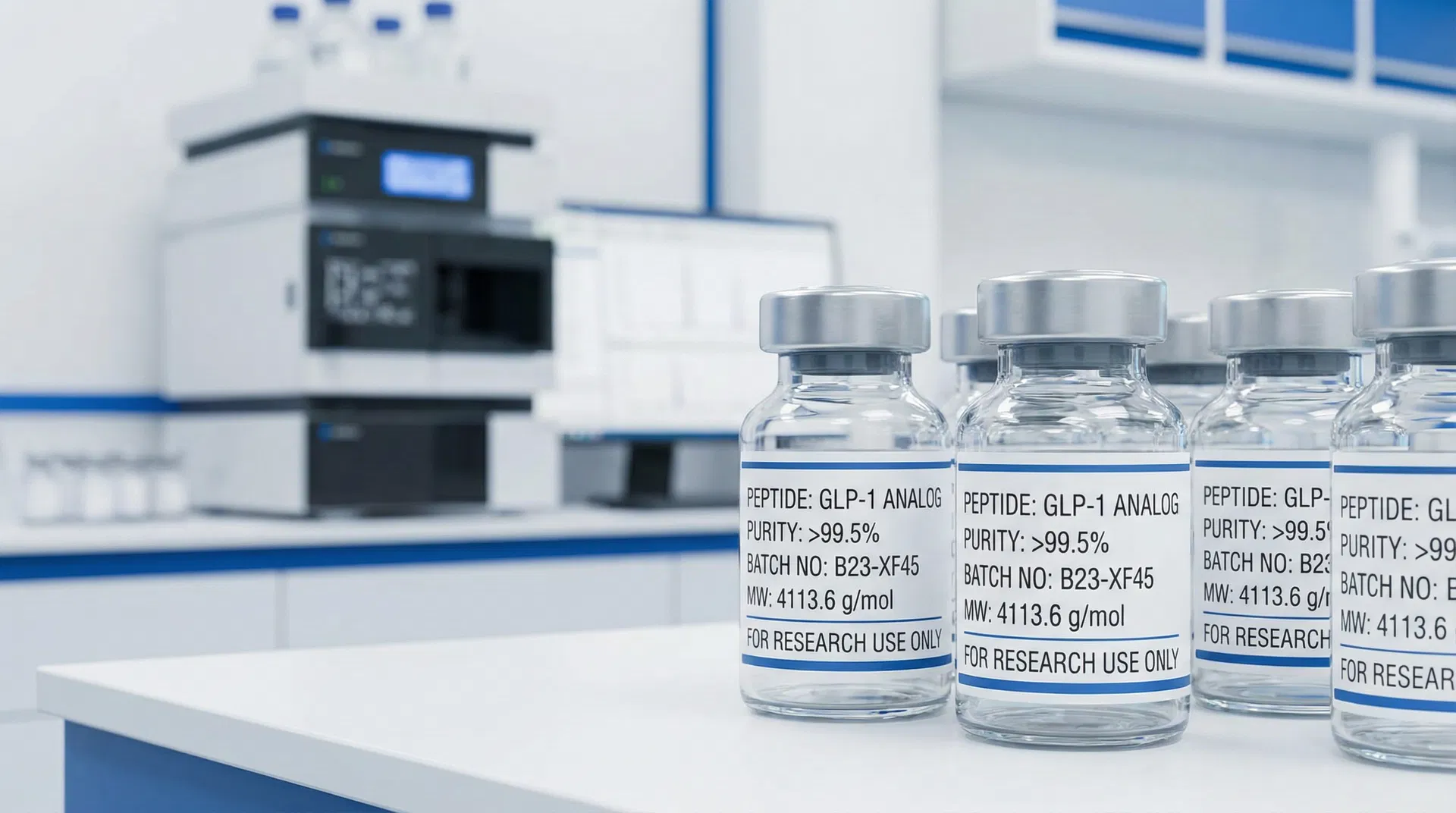
Understanding Peptide Purity and Testing
The critical importance of peptide purity in research
In research applications, peptide purity is not merely a quality metric—it is a fundamental requirement for generating reliable, reproducible scientific data. Impurities in peptide preparations can significantly alter experimental outcomes, leading to misleading conclusions and wasted research resources. Understanding peptide purity and the testing methods used to verify it is essential for any researcher working with these compounds.
## What Does Purity Mean?
Peptide purity refers to the percentage of the desired peptide present in a sample, with the remainder consisting of related compounds, byproducts, or contaminants generated during synthesis or storage. A peptide with 99% purity contains 99 grams of the target peptide per 100 grams of material, with 1 gram consisting of other substances. This seemingly small percentage of impurity can have significant effects on experimental results, particularly in sensitive applications.
The purity of a peptide sample directly impacts its biological activity and the reliability of research findings. When researchers use high-purity peptides (>99%), they can be confident that their experimental results reflect the true properties of the target peptide rather than being influenced by contaminating substances. This confidence in data quality is crucial for advancing scientific knowledge and developing new therapeutic approaches.
## Common Testing Methods
Several analytical techniques are employed to determine peptide purity and verify peptide identity. High-Performance Liquid Chromatography (HPLC) is the gold standard for purity assessment, separating peptide components based on their chemical properties and allowing quantification of the target peptide and any impurities. HPLC provides detailed information about the composition of a peptide sample and can identify specific contaminants.